
Content
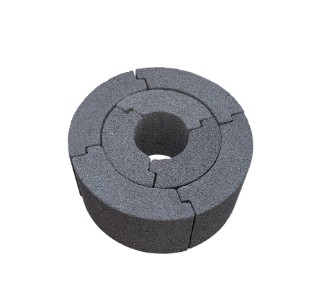
The excellent thermal insulation performance of Foamed Calcium Silicate Insulation Material primarily stems from its unique microstructural design and material properties. As a high-performance inorganic rigid insulation material, it effectively blocks heat conduction through the following three key mechanisms, thus achieving superior insulation effects.
The material contains countless uniformly distributed tiny bubble pores. Since air is a poor conductor of heat, these bubbles act as "heat barriers." When heat attempts to pass through the material, it is repeatedly reflected and scattered by the bubble walls, greatly reducing the efficiency of heat conduction.
By optimizing the formula and foaming process, Foamed Calcium Silicate Insulation Material can provide extremely high thermal resistance (R-Value) while maintaining low density. This high thermal resistance means that, at the same thickness, this material has superior insulation performance compared to many traditional insulation materials (such as ordinary foam or mineral wool).
The material is composed of silicate raw materials and has excellent high-temperature resistance. Even in high-temperature environments, its internal structure remains stable, without melting or structural collapse, ensuring that the insulation performance does not degrade during long-term use.
| Mechanism | Description |
| Multi-layer Closed-pore Structure | Forms uniformly distributed sealed pores, trapping air to block heat transfer paths. |
| Low Thermal Conductivity | Approximately 0.054 W/(m·K), maintaining low heat transfer even at higher densities. |
| High Density & Strength | Resists compression and deformation, preventing thermal bridging that could lead to insulation failure. |
| Moisture Resistance | Resists water absorption, keeping pores dry and preventing accelerated heat transfer. |
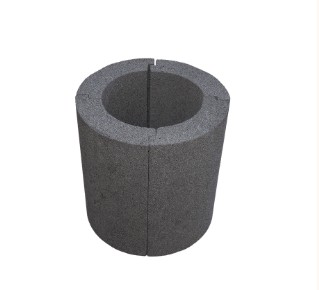
The foaming process of Foamed Calcium Silicate Insulation Material is key to its unique properties. Through a series of precise chemical reactions and physical treatments, the raw materials are transformed into a foamed body with excellent insulation characteristics.
During the manufacturing process, silicate raw materials are mixed with a specific foaming agent (usually a chemical foaming agent). Through controlled chemical reactions (such as redox reactions), the foaming agent releases gas. This gas quickly forms bubbles in the mixture, beginning to build the microporous structure.
Subsequently, the mixture is placed in a high-temperature environment (such as a hot air furnace) for drying. The high temperature accelerates the decomposition of the foaming agent and the release of gas, causing the bubbles to expand rapidly. This step is crucial for forming a uniform pore size distribution.
The expanded material then enters the high-pressure steam curing stage. This process not only further stabilizes the bubble structure but also involves secondary chemical reactions between active components in the steam (such as alkaline metal oxides) and the silicate raw materials. This reaction forms a stronger inorganic framework, thereby enhancing the overall strength of the material.
Finally, the material undergoes drying to remove residual moisture and complete the shaping process. At this point, the foaming process is complete, and a stable and uniform bubble network structure has formed inside the material, possessing lightweight, heat-insulating, and robust properties.
| Step | Core Operation |
| Chemical Foaming | Add foaming agents (e.g., hydrogen peroxide) that decompose to generate gases. |
| Physical Stirring | Uniformly disperse bubbles within the slurry to form an initial foam. |
| Steam Curing | High temperature and pressure treatment to promote gelation and form a sealed pore structure. |
| Drying & Shaping | Remove moisture, solidify, and shape into foamed calcium silicate boards. |
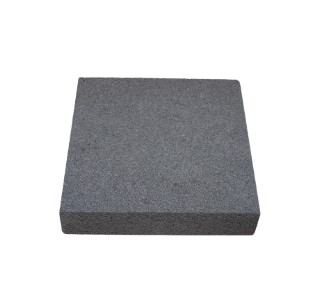
During construction, correct operating procedures are crucial to ensuring the performance of the foamed calcium silicate insulation layer:
Due to the material's rigid nature, professional tools are required for cutting during construction. Appropriate adhesives or mechanical fasteners should be used at the joints to ensure seamless connection.
Although the material itself has excellent moisture resistance, in long-term outdoor environments, it is still recommended to apply a surface coating or protective layer to prevent potential damage from the external environment.
During construction and handling, avoid severe collisions or compression to prevent damage to the internal structure of the material, which could affect its insulation performance.
| Key Aspect | Specific Measures |
| Material Inspection | Ensure boards are free from cracks. |
| Cutting & Fixing | Use professional tools for cutting and install with specialized anchor bolts. |
| Moisture Protection | Take moisture prevention measures in low-temperature construction; protect surfaces from fabric adhesion. |
| Sealing | Ensure tight joint connections to prevent thermal bridging and air infiltration. |
This material performs exceptionally well in high-temperature conditions, which is a significant advantage that distinguishes it from other insulation materials:
Foamed Calcium Silicate Insulation Material maintains structural stability in high-temperature environments and does not melt or decompose.
Even at high temperatures, the material maintains high compressive strength, ensuring that the insulation layer does not collapse under external pressure.
As an inorganic non-metallic material, it has good flame-retardant properties and can slow down the spread of fire in the event of a fire.
Even at high temperatures, the foamed calcium silicate material maintains good density and does not melt or expand significantly, ensuring long-term insulation effectiveness.
| Performance Indicator | Performance |
| Maximum Service Temperature | Up to 1000°C, significantly higher than traditional insulation materials. |
| Thermal Conductivity Stability | Minimal change at high temperatures; slower performance degradation. |
| Structural Integrity | Does not melt or expand excessively at high temperatures, maintaining insulation. |
| Moisture Resistance | Remains low water absorption even in high-temperature, high-humidity environments. |
Compared to traditional fibrous insulation materials such as rock wool and glass wool, Foamed Calcium Silicate Insulation Material offers the following advantages:
The maximum operating temperature of rock wool and glass wool is typically around 600°C, while foamed calcium silicate can withstand temperatures up to 1000°C, making it particularly suitable for insulating high-temperature pipes and equipment.
Rock wool and glass wool have a loose fibrous structure, making them susceptible to moisture absorption and loss of insulation performance. Foamed calcium silicate, on the other hand, is a dense, rigid material with extremely low water absorption, allowing it to maintain its insulation performance in humid environments.
Foamed calcium silicate generally has higher compressive strength than rock wool and glass wool, enabling it to better support its own weight in underground pipelines or high-pressure environments, preventing deformation of the insulation panels and the formation of thermal bridges.
Foamed calcium silicate is resistant to aging and has stable chemical properties. Unlike fibrous materials, it does not degrade over time, resulting in a longer service life and lower maintenance costs.
| Comparison Dimension | Foamed Calcium Silicate Insulation Material | Rock Wool / Glass Wool |
| Insulation Principle | Multi-layer closed-pore structure + low thermal conductivity, with air trapped in pores to block heat transfer. | Loose fiber structure, with air trapped between fibers for insulation. |
| High-Temperature Resistance | Up to 1000°C, maintaining structural stability in high-temperature environments. | Typically up to 600°C. |
| Moisture Resistance | Extremely low water absorption, does not absorb moisture or degrade performance. | High moisture absorption, leading to increased thermal conductivity when wet. |
| Compressive Strength | High density and strength, minimal deformation under compression. | Softer, more prone to compression deformation. |
| Service Life | Chemically stable with a long lifespan. | May age and degrade over time. |
Copyright © Zhejiang Yichuang New Material Technology Co., Ltd. Calcium Silicate Pipe Insulation Manufacturer Fireproof Material Supplier





 English
 عربى
عربى Español
 русский
 Deutsch
 中文简体
中文简体

 English
 عربى
عربى Español
 русский
 Deutsch

 Quick Link


